What to Expect in Your First Acupuncture Session
In this blog post and video, I demystify the acupuncture experience for athletes, addressing common concerns about pain and the unknown. I walk you through a typical first session, highlighting the importance of an initial conversation, a thorough assessment, and a comfortable treatment process. You'll learn that most people feel minimal discomfort from the needles and often experience a profound sense of relaxation, with two out of three clients even falling asleep during their first session. I encourage you to ask any questions you have, as understanding this process can truly enhance your recovery and performance. Remember, the biggest barrier is often just the fear of the unknown.
⏱️ TIMESTAMPS:
0:00 - Introduction: Removing the Fear of the Unknown
1:00 - Initial Conversation: Understanding Your Goals
2:00 - Physical Assessment: Western + Eastern Diagnostics
3:01 - Treatment Process: Interactive and Comfortable
3:55 - Managing Discomfort: You're Always in Control
4:39 - Relaxation Phase: The "Acu-Nap" Explained
5:44 - Post-Session Expectations: Soreness, Sleep, Recovery
6:07 - Scheduling Strategy for Athletes
7:03 - Key Takeaways: Reality vs. Fearful Imagination
Physical Assessment: Detective Work Before Needles [2:00]
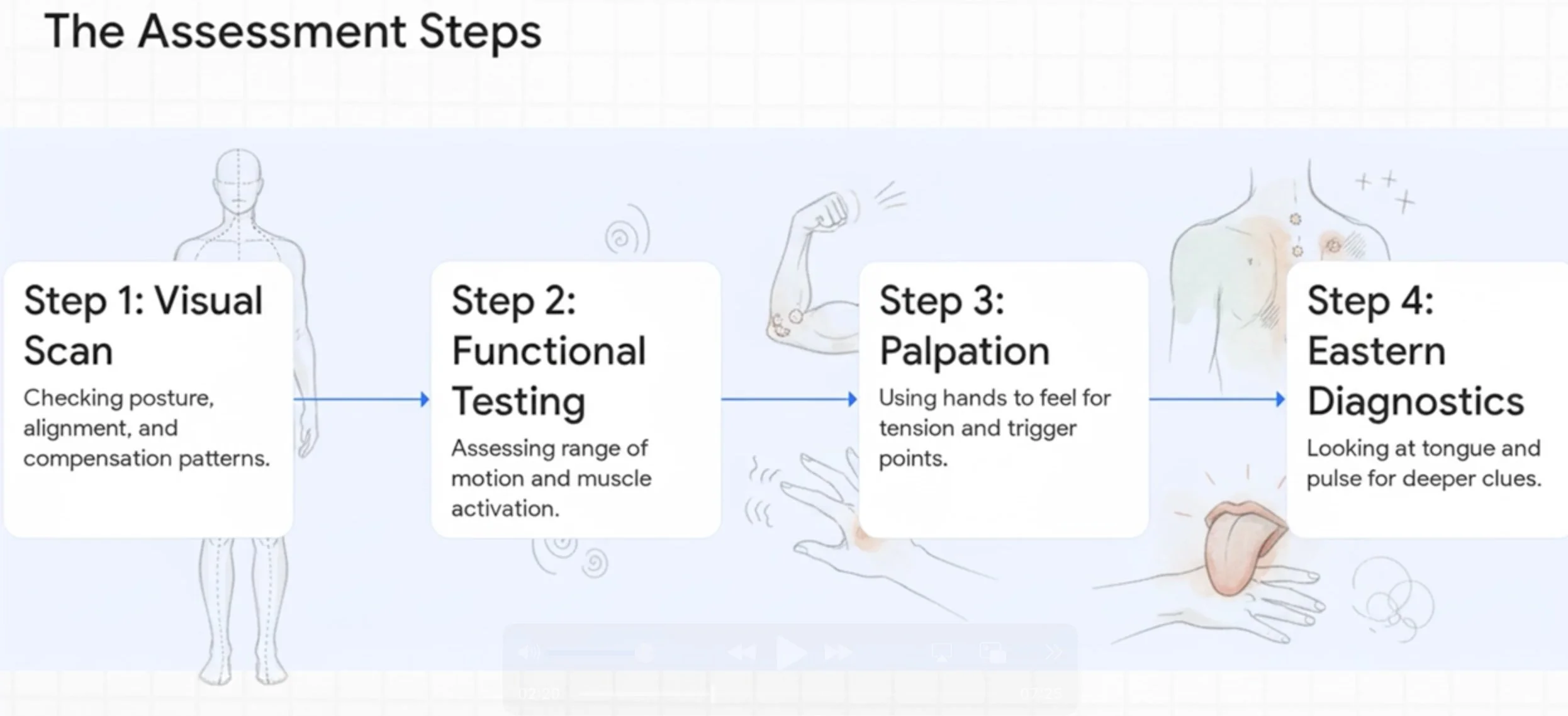
Before any needles go in, I'm doing comprehensive detective work to understand exactly what's happening in your body. This isn't a quick once-over—it's a methodical assessment combining Western orthopedic testing with traditional Eastern diagnostics.
Visual postural scan reveals compensation patterns you might not know you have—hip alignment, shoulder height, how your body carries tension
Functional testing shows which muscles fire properly and which have shut off, plus range of motion assessment
Hands-on palpation identifies trigger points and fascial restrictions that imaging often misses
Eastern diagnostics (tongue and pulse) provide deeper insights into your body's internal balance
The bridge: Western testing tells me WHAT's dysfunctional. Eastern assessment reveals WHY. Two complementary maps of the same territory.
Treatment Process: Meeting You Where You Are [3:01]
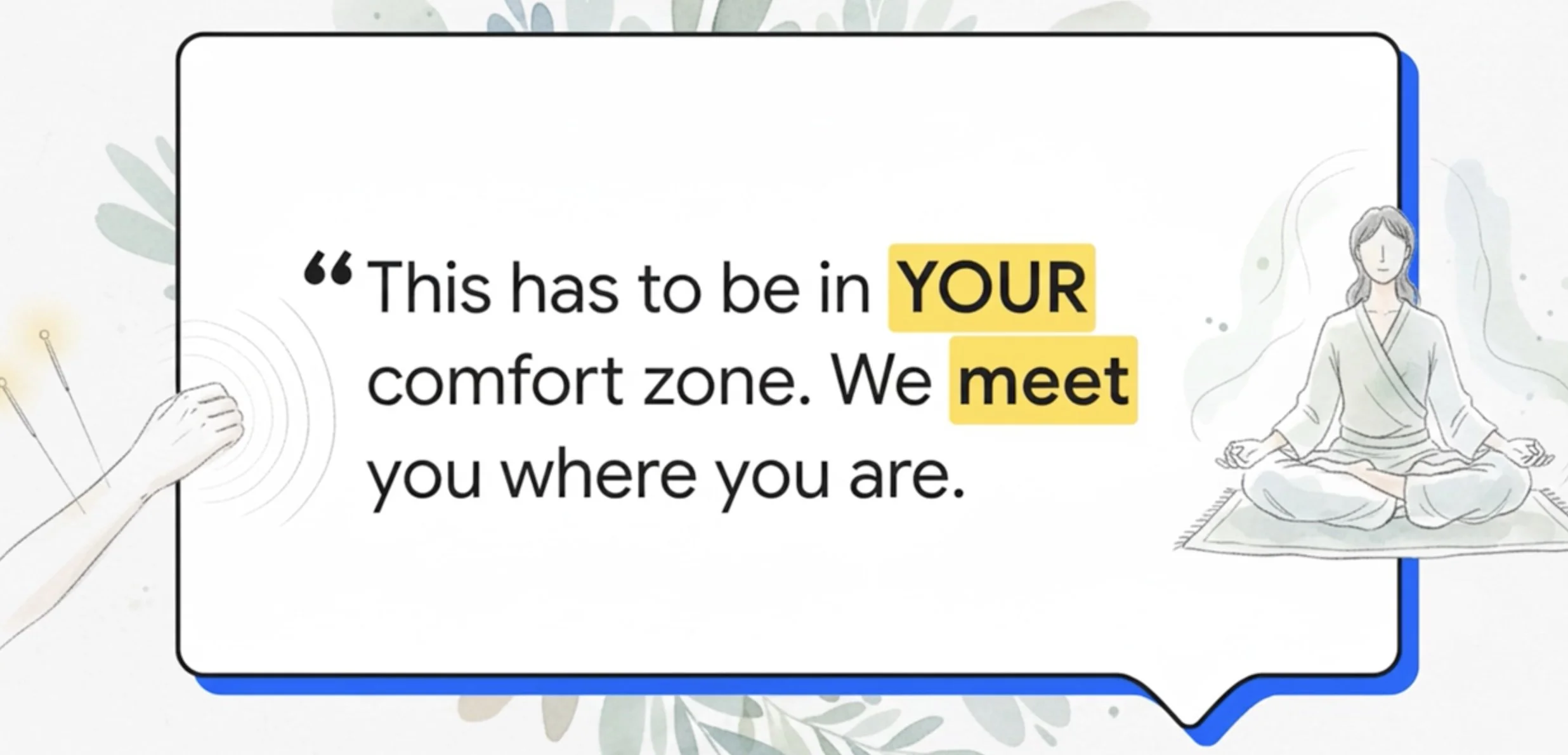
This part is built directly on everything we just learned in the assessment, and the two most important words are interactive and comfortable. You're an active participant, and the entire experience has to be in YOUR comfort zone.
Nervous about needles? We start with just a few points to build your confidence
Comfortable or had acupuncture before? We might do more
Constant communication throughout: "What are you feeling? Do you feel anything?"
Normal sensations include tingling, warmth, heaviness, or a dull ache—these mean it's working
Muscle twitches surprise everyone but are actually fantastic signs—tight muscles releasing, weak muscles activating, trigger points letting go
If you feel anything sharp lasting more than three seconds, just say the word. We adjust immediately. You're always in control.
The "Acu-nap": Your Body's Healing Mode [4:39]
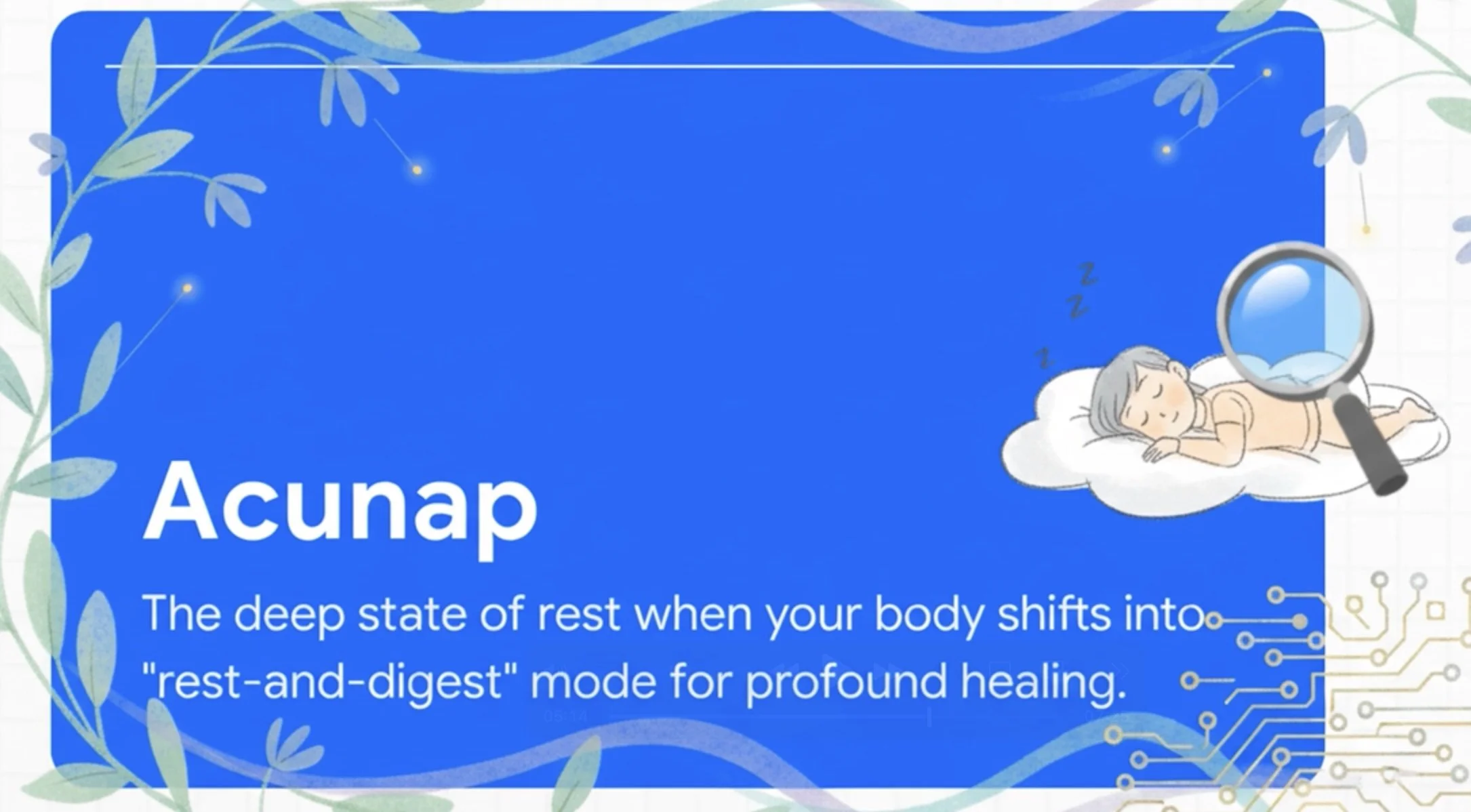
Here's a statistic that blows people's minds: 2 out of 3 people fall asleep during their very first acupuncture session. People who walked in anxious about needles are so relaxed minutes later that they literally drift off. We call it the "Acu-Nap."
Your nervous system shifts from stressed fight-or-flight into deep rest-digest mode
This is the same healing state your body uses during nighttime sleep
The environment supports this: private room, heated table, dim lights, call button for safety
Duration varies (5-30 minutes) based on what we're trying to accomplish
Some fall completely asleep, some feel like they're floating, most get profoundly relaxed
This state isn't just pleasant—it's therapeutic. Your body does its deepest healing work when you're in this parasympathetic rest mode.
Ready to experience your first session? I offer complimentary 15-minute assessments where we can discuss your specific situation, answer your questions, and see if this approach makes sense for your training and recovery goals.
Post-Session: What Happens After You Leave [5:44]
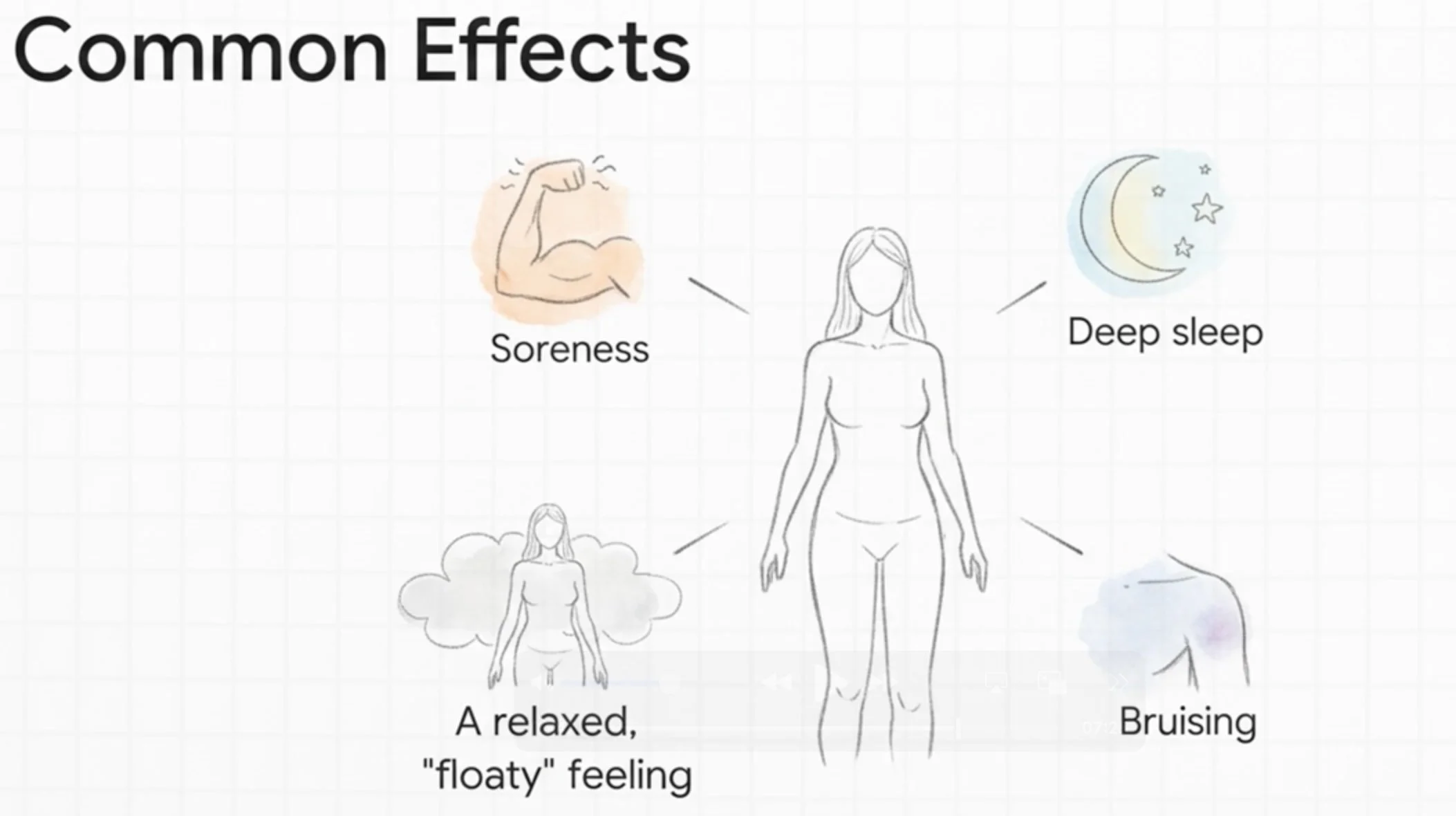
Walking out feeling floaty and relaxed is common, but here's what to expect in the hours and days after treatment—and why it's all part of the healing process.
Soreness like DOMS (delayed onset muscle soreness) is very common and a good sign—your body is rebuilding and changing
Incredible sleep that night—deep, restorative rest as your system integrates the treatment
Feeling relaxed or floaty for hours afterward
Small bruises can occasionally happen but aren't common
Drink plenty of water to support the healing process
Pro tip for athletes: Schedule your workout BEFORE your acupuncture session, then go home and rest. Let your body "marinate" in the healing instead of immediately putting it under training stress. This is why weekend appointments work so well—post-long-run treatment, then recovery.
What to Expect in Your First Acupuncture Session
Your First Session Journey
Click each step to discover what happens—and see that the reality is far calmer than you might imagine
"The barrier isn't the experience—it's the fear of the unknown. 2 out of 3 people fall asleep during their very first session."
As an acupuncturist in San Diego working primarily with athletes, I notice a common pattern. When athletes come in for their first acupuncture session, they bring a mix of curiosity and low-grade anxiety. You're used to understanding your body, tracking metrics, knowing exactly what to expect from PT or massage. But acupuncture feels like a black box. You know it might help, but the process itself is a mystery.
This uncertainty is the main barrier. Athletes understand DOMS (Delayed Onset Muscle Soreness) and can follow complex rehab protocols. You know what deep tissue massage is supposed to feel like. But acupuncture uses different language, different assessment methods, a different treatment approach—and that can feel intimidating. The unknown, not the needles themselves, creates hesitation for most people considering their first time with acupuncture.
My goal with this guide is to remove that mystery. I'll walk you through every step of a typical first acupuncture session at my San Diego practice, Funktion Acupuncture. We'll cover everything from the moment you book to what you can expect days after treatment. By pulling back the curtain on the entire process, I hope to demystify your first acupuncture experience so you can relax and get the most out of your visit.
Before You Arrive: Setting the Foundation for Success
Your treatment doesn't start when you walk through the door—it begins the moment you book your appointment. This prep phase is crucial for a successful first acupuncture session.
The Importance of Your Intake Form
After you schedule, you'll get a comprehensive intake form via email. I know it can seem long, but every question has a purpose. This form gives me crucial context about your condition, training schedule, injury history, and specific goals. It's the first and most important piece of data I receive.
Fill it out thoroughly, and I can start preparing for your unique case before you even arrive. This makes our time together more efficient and effective. In my San Diego practice, I've found that the more detail you give me upfront, the faster we can dive into what's actually happening in your body.
What Happens Behind the Scenes
I review your intake form in detail before your appointment. This is where the initial detective work begins. Based on your information, I start thinking about your case from both Western sports medicine and Eastern medicine perspectives.
I'm considering potential channel involvement, which motor points might be inhibited, what compensation patterns might be at play. By the time you walk in for your first acupuncture appointment, I already have a preliminary map and a set of questions to help us dive deeper, faster.
This behind-the-scenes prep, along with simple logistics like automated text reminders, keeps the whole process organized and focused on you.
Conversation First, Needles Later: The Initial Consultation
A core principle in my practice is "conversation first, needles later." The first 15-20 minutes of your appointment are dedicated entirely to talking. We won't even think about needles until we're both on the same page.
The goals of this initial conversation are simple:
To understand your condition and your goals deeply
To learn how your issue impacts your training, performance, and daily life
To answer any questions or concerns you have about your first acupuncture session
During this talk, I'll also offer a simple explanation for how acupuncture works. The way I frame it for athletes is this: "What we're trying to do is reteach the body how to heal itself." The needles send signals to your brain, reminding it how to activate a weak muscle, release a tight one, or calm inflammation.
I often use the gym analogy. Like strength training, acupuncture requires consistency for lasting results, and you might feel a bit sore afterward—similar to DOMS. This helps set realistic expectations for what to expect in your first acupuncture session.
Most importantly, we discuss the kinds of sensations you might feel before any needles are used. Here's the key principle: the treatment must always be in your comfort zone.
The Assessment: Western Testing Meets Eastern Diagnostics
After our conversation, the next phase is what I call "detective work." This is a comprehensive, hands-on assessment that blends two powerful perspectives to get a complete picture of what's happening in your body.
Visual Postural Scan
I start by simply observing how you stand. I'm looking at hip alignment, shoulder height, pelvic tilt, and any obvious compensation patterns your body has adopted to deal with an injury or imbalance.
Functional Testing
Next, we move into sports-medicine-specific testing. This includes manual muscle testing to see which muscles are firing properly and which aren't, plus range of motion assessments to identify restrictions. This helps me pinpoint which motor points are inhibited and need to be activated.
Palpation
This is central to Eastern medicine—using hands as diagnostic tools. I'm feeling for trigger points, tension, fascial restrictions, and channel imbalances. In my experience, my hands often pick up things an MRI misses—subtle tissue adhesions, channel congestion, asymmetries in muscle texture that only touch can detect.
Traditional Eastern Diagnostics
When appropriate, I'll also look at your tongue and feel your pulse. The tongue, as your body's only visible muscle, gives clues about your internal state (heat, deficiency, etc.). The pulse provides a map of your body's energetic balance.
The East-West Bridge in Action
This is where the integration becomes powerful. The Western orthopedic assessment tells me WHAT'S dysfunctional(your VMO isn't firing, or your IT band is tight). The Eastern medicine assessment tells me WHY it's dysfunctional(there's a Spleen channel deficiency or a Gallbladder channel excess).
Together, these two maps give us a complete and actionable understanding of the problem. This comprehensive assessment is what makes your first acupuncture session effective—we're not guessing, we're targeting precisely.
The Treatment Experience: Interactive and Comfortable
Once the assessment is complete, it's time for treatment itself. My first priority is your comfort. I'll make sure you're positioned perfectly on the table using pillows, bolsters, and an adjusted headrest so you can fully relax for the next 20-30 minutes.
Meeting You Where You Are
My approach is to "meet you where you are." If you're nervous during your first time with acupuncture, we might start with just a few needles to let you get comfortable with the sensation. If you're more relaxed or have had acupuncture before, we might use more. The treatment is always tailored to your comfort level.
Constant Communication
Communication is key throughout the needling process. I'll constantly check in, asking, "What are you feeling?" This helps us learn the language of sensation together.
Common therapeutic sensations include gentle tingling, a feeling of warmth or heaviness, or a dull ache at the needle site. The only sensation we don't want is a sharp pain lasting more than a few seconds. That's your cue to let me know so I can adjust the needle immediately.
The Muscle Twitch Phenomenon
One of the most interesting things that happens is the muscle twitch. You might feel a muscle jump or fasciculate for a second. This is a fantastic sign! It means a tight, knotted-up muscle is finally releasing, or a weak, inhibited motor point is activating—like we're jump-starting a dead battery.
It's important to remember that individual needle sensitivity varies greatly. Everyone's experience during their first acupuncture session is different, and our only goal is to work within your unique comfort zone.
The "Acu-Nap": Deep Relaxation and Healing
Here's what surprises first-timers most: two out of three people fall asleep during their first acupuncture session.People who walked in anxious about needles are so deeply relaxed twenty minutes later that they literally drift off. In my practice, we call this the "acu-nap."
What's Actually Happening
This isn't just about being tired—there's real physiology at play. The treatment helps shift your nervous system out of sympathetic "fight-or-flight" mode (where so many of us live) and into parasympathetic "rest-and-digest" state. This is the same healing mode your body enters during deep, restorative sleep at night. It's when your body does its most profound repair work.
The Environment
To facilitate this deep relaxation, the entire environment is designed for calm. You'll be in a private room with dim lights. The treatment table has a heater underneath, and I often place an additional heat lamp over areas that need extra warmth and circulation.
For your peace of mind, you'll have a call button right next to you. This allows me to leave the room so you can have complete privacy while giving you the reassurance that I'm just a button-press away if you need anything.
Duration and Additional Modalities
The rest period can last anywhere from 5 to 30 minutes, depending on what we're trying to accomplish. During this time, I might also incorporate other modalities like e-stim (electrical stimulation on the needles), moxa (heat therapy), or gua sha to enhance the treatment.
After Treatment: What Happens When You Leave
The effects of your first acupuncture session don't stop when you leave the clinic. Here's what to expect in the hours and days following treatment.
Post-Treatment Soreness
It's common to feel some soreness, much like the DOMS you'd feel after a good workout. Don't be discouraged by this! It's actually a positive sign that your body is responding to the treatment and that deep-seated patterns are beginning to change.
Other Common Effects
Other normal and positive effects include:
Having a deep, incredibly restful night of sleep
Feeling a bit relaxed, calm, or even "floaty" for a few hours afterward
Drinking plenty of water helps the process
Response Variability
Everyone's response is different. Some athletes feel significant relief immediately after their first acupuncture session, while others may need several sessions before they notice a clear shift. The process often involves peaks and valleys, but the goal is a consistent upward trend over time.
Chronic conditions you've had for years will naturally take longer to retrain than an acute injury that just happened last week. This timeline factor is important to understand—we're retraining patterns, which takes time and consistency.
Practical Guidance
Heat vs. Cold: I generally recommend using heat to promote circulation and healing. The only exception is if you have acute, visible swelling, in which case cold is appropriate.
Training: Listen to your body. If possible, the ideal scenario is to work out before your session and then rest afterward to let the treatment "marinate." This is why weekend appointments work incredibly well—I can treat you post-long-run when tissues are most reactive, then you have the rest of the day to recover and integrate the work.
Bruising: It's not common, but occasionally a needle can hit a small capillary near the skin's surface, causing a small bruise. This is harmless and fades quickly.
What Surprises First-Time Patients Most
After thousands of first acupuncture sessions, I've noticed a consistent pattern in what surprises people the most. It almost always comes down to three things:
1. How little the needles are actually felt. Most people anticipate a sharp, painful sensation, but the reality is often just a small tap or nothing at all upon insertion. The therapeutic sensations that follow are dull and deep, not sharp.
2. The depth of relaxation achieved. The "acu-nap" is real. Athletes, who are often wired and stressed, are consistently amazed that they can fall into such a deep state of rest in the middle of the day.
3. How quickly the time passes during the rest period. When you're in that deep rest-and-digest state, 25 minutes can feel like five. People are often surprised when I come back in to remove the needles.
What I observe clinically, over and over again, is the massive gap between expectation and reality. Most people build this scary image in their minds, then the reality is calm and comfortable. The barrier was the unknown, not the actual experience.
The Eastern Medicine Perspective on First Sessions
From an Eastern medicine viewpoint, your first acupuncture session is about more than just treating a symptom—it's the beginning of a therapeutic relationship.
During the assessment and initial treatment, I'm "reading your body's language" to understand your unique constitution and patterns. I'm looking to see where Qi (your body's vital energy) is stuck, where it's deficient, and where it might be in excess.
Setting the Foundation
The first treatment begins to shift these patterns and lays the groundwork for the Three Stages of healing that guide my practice: Relieve, Restore, and Elevate. We start by relieving your primary symptom, but we're also simultaneously beginning the work of restoring the underlying function and planting the seeds to elevate your overall health and performance.
Constitutional Differences
This is why some people have a dramatic response after just one session—we've managed to unblock a major traffic jam. For others, whose bodies may be more depleted or have more ingrained patterns, it can take several sessions for the body to "get it" and start responding.
Both are completely normal and reflect the constitutional differences Eastern medicine has recognized for millennia. This isn't about belief—it's about recognizing patterns your body already knows.
Conclusion: Your First Session is the First Step
Walking through every step of a first acupuncture session helps remove the mystery and anxiety that can come with trying something new. As you can see, the reality of the experience is often far different from what people imagine. It's a process rooted in conversation, detailed assessment, and patient comfort. Far from being scary, the experience for most is calm, comfortable, and deeply relaxing.
In my experience, the biggest barrier for athletes isn't the needles or the time commitment—it's the fear of the unknown. Once that barrier is removed, the path to healing becomes much clearer. Your first acupuncture session is simply the first step on that path.
If you're curious about what YOUR first session might look like specifically—based on your unique condition, training, and goals—I offer complimentary 15-minute assessments at Funktion Acupuncture in San Diego. We can discuss your situation, answer your questions, and help you understand if this approach makes sense for you.
This content was created with AI assistance (Claude AI & Google NotebookLM) and inspired by comprehensive patient experience documentation and clinical practice insights. All clinical perspectives and Eastern medicine explanations are from Michael Cohen, LAc, practicing sports medicine acupuncture in San Diego at Funktion Acupuncture.