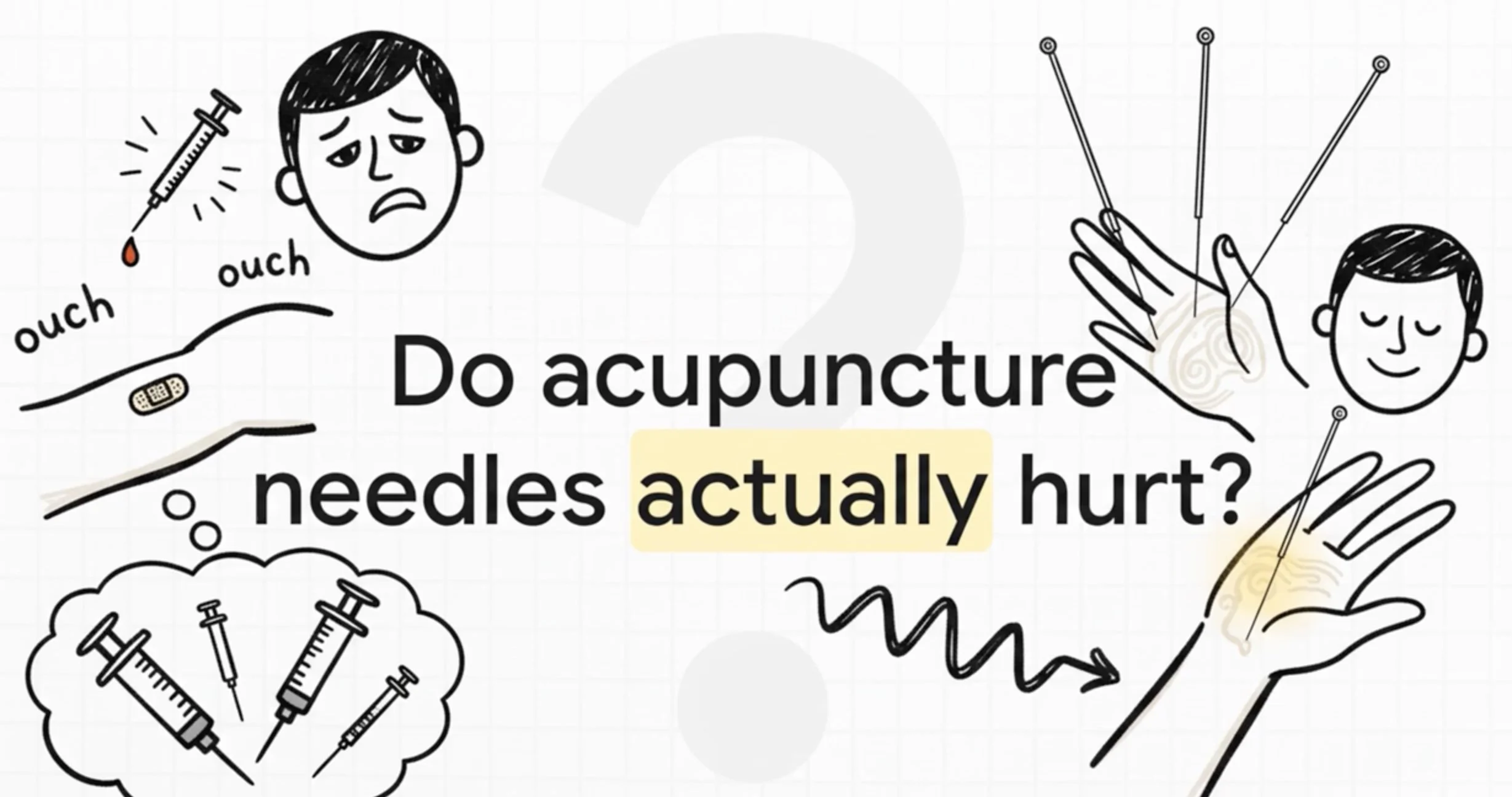
Do Acupuncture Needles Actually Hurt? The Science Behind the Sensation
In this blog post and video, I dive into the world of acupuncture and address the common fear surrounding it: does it hurt? I share compelling data from studies showing that the average pain rating during acupuncture is just 1.3 out of 10, with 87% of patients experiencing minimal to no pain at all. I explain how the unique design of acupuncture needles and the way our nervous system processes sensations contribute to a calming experience, often leading to a state of relaxation known as the 'acunap.' My goal is to challenge the misconception that needles equal pain, and I encourage you to reconsider your fears and explore acupuncture as a powerful tool for recovery and performance enhancement.
⏱️ TIMESTAMPS:
0:00 - Introduction: The One Question Stopping Athletes
0:45 - Pain Perception: What the Data Actually Shows
2:00 - Understanding Needle Design: Physics & Engineering
2:53 - Nervous System Response: Gate Control Theory
3:38 - Neurological Effects: Brain Imaging Evidence
4:24 - Therapeutic Sensation (De Qi): What You'll Feel
5:40 - Post-Acupuncture Experience: The Surprising Relaxation
6:21 - Conclusion: Fear vs. Reality
The Data - Pain Perception in Acupuncture [0:45]
The fear of acupuncture needles is one of the biggest barriers keeping athletes from trying treatment. But here's what the research actually shows: a comprehensive study tracking over 1,300 individual sessions found the average pain rating was just 1.3 out of 10. When you zoom out to data covering 7.4 million treatments worldwide, 87% of patients report minimal or no pain at all.
Key findings:
57.7% of first-time patients report zero pain on their initial treatment
Average pain score remains consistently low across all sessions
The gap between anticipatory anxiety and actual experience is massive
Patient satisfaction exceeds conventional healthcare benchmarks
The numbers tell a clear story: the needle you're imagining isn't the needle being used.
The Physics - Understanding Needle Design [2:00]
The fundamental reason acupuncture doesn't hurt like medical needles comes down to engineering. A standard acupuncture needle is 0.20mm in diameter - about twice the thickness of a human hair. Compare that to a blood draw needle at 0.8mm, and you're looking at something 4 times thinner.
Critical design differences:
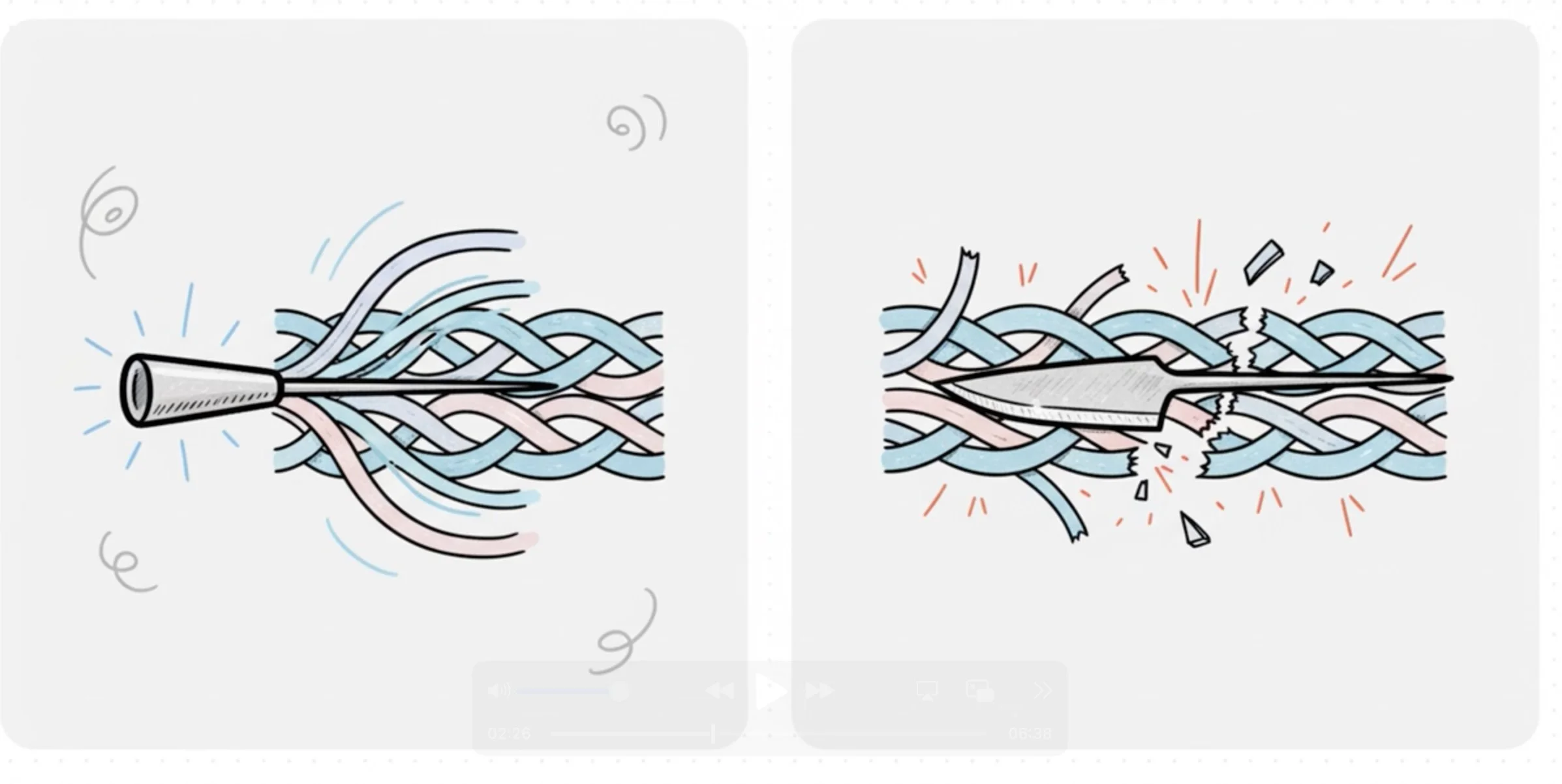
Acupuncture needles are solid with smooth, cone-shaped tips that displace tissue
Medical needles are hollow with beveled cutting edges designed to pierce and create channels
Research confirms: needle diameter directly correlates with pain perception
You could fit multiple acupuncture needles inside one hollow medical needle
Think of it like weaving thread through fabric versus cutting a hole through it. The solid construction glides between tissue fibers rather than traumatizing them. This isn't marketing - it's physics.
The Sensation - What De Qi Actually Feels Like [4:24]
If what you're feeling during acupuncture isn't pain, what is it? Eastern medicine has a specific term: de qi (pronounced "duh-chee"), which literally means "arrival of qi" or energy. But a better translation is simply "therapeutic sensation."
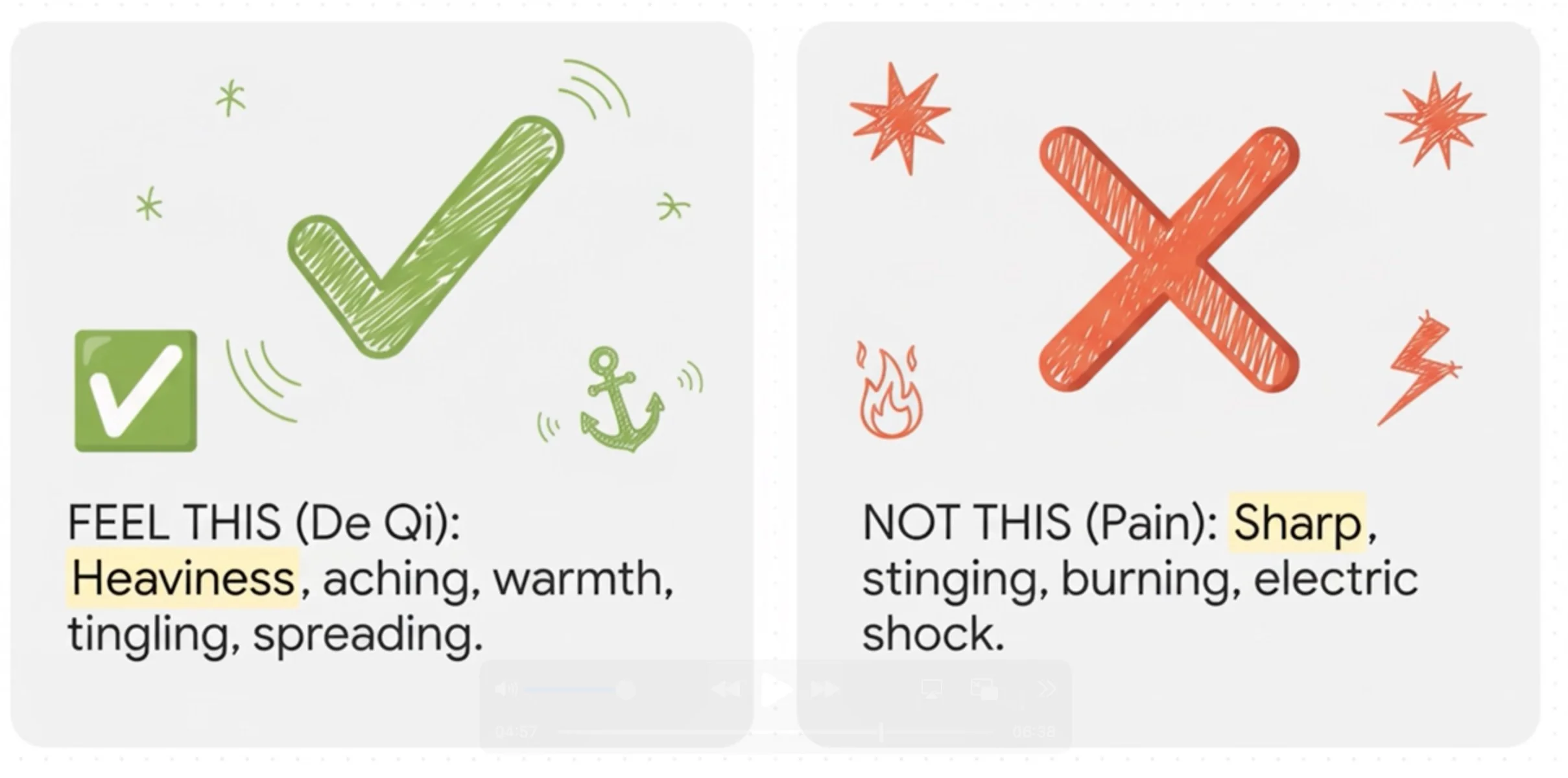
Normal de qi sensations (what to expect):
Heaviness or weighted feeling in the area
Dull, deep ache that may spread along pathways
Warmth or tingling around the needle
Sense of fullness or gentle pressure
Not typical (communicate to practitioner):
Sharp, stinging, or burning sensations
Electric shock feeling (needle may be touching a nerve)
Pain that increases rather than stabilizes
Harvard research provides the biomechanical explanation: when needles are gently stimulated, collagen fibers in your connective tissue wind around the needle like spaghetti around a fork. That heaviness you feel? That's tissue biomechanics at work, not tissue damage. The stronger the de qi in a particular area, the more that tissue typically needs attention.
The Experience - Post-Acupuncture Relaxation [5:40]
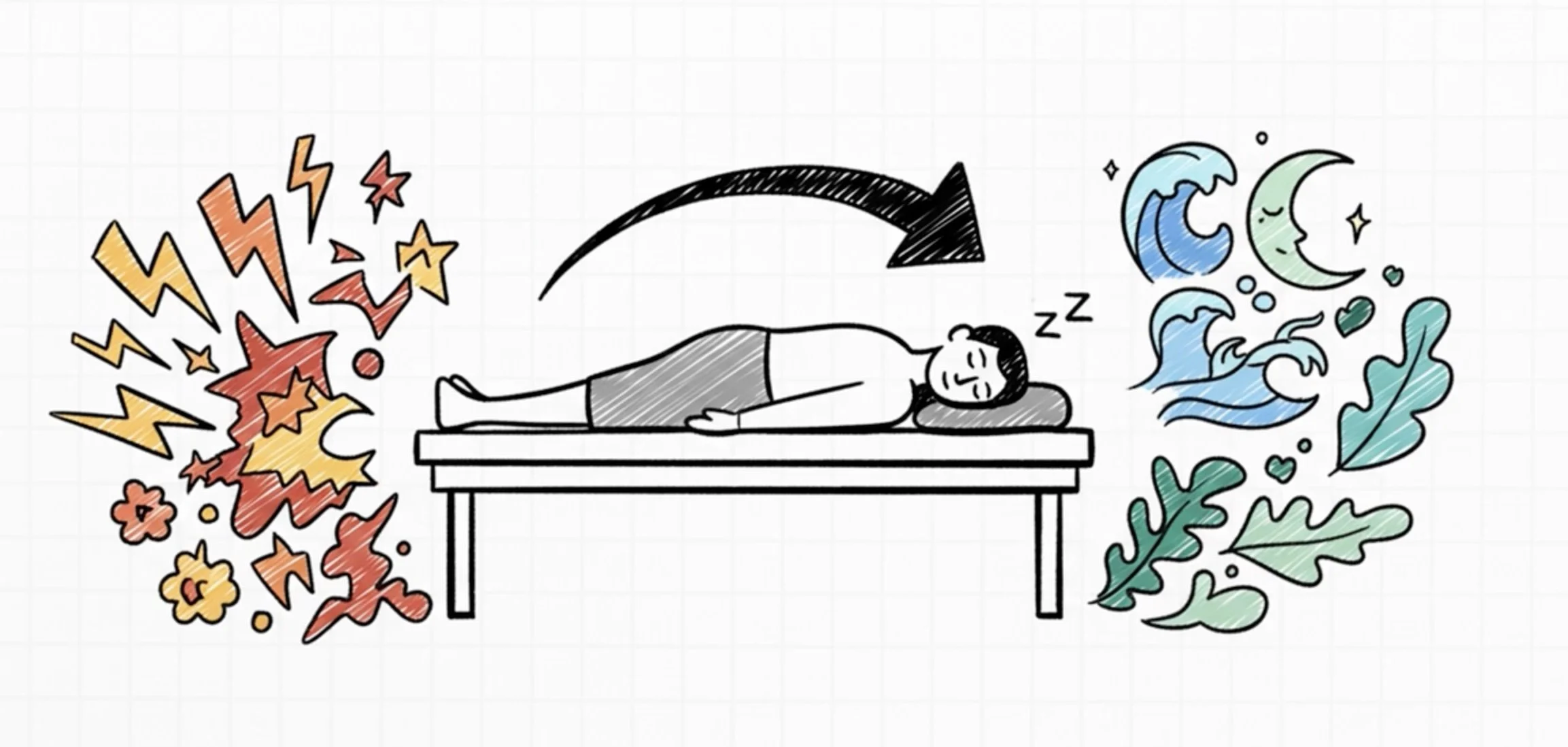
Here's what surprises athletes most: after the needles are placed, instead of lying there tense and uncomfortable, your nervous system does a complete 180. It shifts from fight-or-flight (sympathetic) mode into rest-and-digest (parasympathetic) mode. This deep relaxation state is so common, practitioners call it the "acu-nap."
What happens during the rest period:
Profound relaxation as your nervous system downregulates
Many patients fall asleep despite having needles in place
Body integrates the treatment while in healing mode
Time passes surprisingly quickly (20-30 minutes feels like 5-10)
One practitioner put it perfectly: "Athletes push through torn ligaments and stress fractures, yet the idea of a hair-thin needle creates so much anxiety. It shows how powerful our mental models are."
The fear is almost always worse than the reality. The anticipation keeps you stuck; the experience dissolves the concern. Weekend appointments are ideal because you can come straight from your long run when tissues are most reactive, get treatment, and have the rest of the day to integrate the work.
Ready to experience it yourself? If needle anxiety has been the one thing holding you back from trying acupuncture for your IT band, runner's knee, chronic tightness, or recovery optimization, let's talk. I offer complimentary 15-minute assessments at Funktion Acupuncture in San Diego where we can address your specific concerns and you'll know exactly what to expect. Book your free assessment: www.bookacu.com
Do Acupuncture Needles Actually Hurt? The Science Behind the Sensation
If you're an athlete considering acupuncture but worried about pain, here's what you need to know: the needle you're imagining isn't the needle being used.
Most of us picture getting a shot or having blood drawn when we think about acupuncture. That mental image—the sharp pinch, the hollow needle piercing your skin—becomes the barrier that keeps athletes from trying treatment that could help their IT band syndrome, runner's knee, or chronic shoulder tension.
Here's what the research actually shows: In a study tracking 230 patients across 1,380 acupuncture sessions, 57.7% reported zero pain on their first treatment. The average pain score? 1.3 out of 10. When you look at data from 7.4 million treatments worldwide, 87% of patients experience minimal to no pain.
The fear-reality gap exists because acupuncture needles are fundamentally different from medical needles in design, diameter, and how your nervous system processes them. Let's break down exactly why acupuncture doesn't hurt the way you think it does.
The Data: What Clinical Research Shows About Acupuncture Pain
The largest study on acupuncture pain analyzed 845,637 patients across 7.4 million treatments. The findings are clear:
Needle site pain: Reported by just 3.75% of patients
Pain per individual treatment: Only 2.43% of sessions
Pain intensity when it occurred: Average of 13.4 out of 100 (mild discomfort)
The detailed Gold et al. study tracking 1,380 sessions session-by-session found:
Pain LevelFirst SessionAcross All SessionsNo pain (0/10)57.7%Consistently lowMild pain (1-2/10)28%StableMean score1.3/10No increase over time
Here's what surprised researchers: first treatments weren't more painful than subsequent ones. Your body doesn't need to "get used to" acupuncture because there's minimal pain to adapt to in the first place.
A British survey of 31,822 consultations found needling pain in just 1.1% of treatments. And when comparing acupuncture to other interventions, the difference is striking:
In a randomized study of 300 emergency patients comparing acupuncture to morphine for acute pain:
Acupuncture group: Adverse effects in 2.6% of patients
Morphine group: Adverse effects in 56.6% of patients
The acupuncture group also achieved faster pain reduction with virtually no side effects.
Everyone's pain threshold differs, but the data across millions of treatments shows a consistent pattern: acupuncture produces minimal discomfort for the vast majority of patients.
Why Acupuncture Needles Feel Different: The Physics
The fundamental reason acupuncture doesn't hurt like medical needles comes down to engineering.
Diameter Comparison
Needle TypeDiameterComparisonStandard acupuncture0.20 mmTwice the thickness of a hairInsulin pen0.25-0.30 mmSlightly thickerInjection needle0.5-0.7 mm2.5-3.5x thickerBlood draw needle0.7-0.9 mm4x thicker
You could fit four acupuncture needles inside the hollow tip of a single blood draw needle. One practitioner described the comparison as "like comparing a shoestring to a garden hose."
Solid vs. Hollow Construction
This is the real game-changer. Medical needles are hollow with beveled cutting edges designed to pierce tissue and create a channel for fluid transfer. They literally cut and remove a core of tissue during penetration.
Acupuncture needles are solid with conical, non-beveled tips that push tissue aside rather than cutting it. Think of it like weaving thread through fabric versus cutting a hole through it.
Research confirms that needle diameter directly correlates with penetration force, tissue trauma, and pain perception. The finer the needle, the less pain. Acupuncture needles fall well below the pain threshold established in clinical studies.
The Guide Tube Technique
In my practice, I use a guide tube—a small plastic tube invented by a blind Japanese acupuncturist in the 1600s. Here's why it works:
The tube creates pressure on surrounding skin that activates mechanoreceptors (touch sensors). These touch signals travel faster than pain signals and essentially "close the gate" at your spinal cord, blocking pain signals before they reach your brain. This is called gate control theory, and it's the same reason rubbing your elbow after banging it makes it feel better.
The needle then slides through quickly—often so fast you barely register it. Studies show that 10-12% of patients can't reliably tell when an acupuncture needle has actually penetrated their skin versus when a non-penetrating device is used.
The Neurology: Why Your Brain Processes Acupuncture Differently
When you cut yourself or stub your toe, your body activates C-fibers—slow nerve fibers that transmit burning, sharp pain at 0.5-2 meters per second. These are your classic pain sensors.
Acupuncture primarily activates A-delta fibers—faster nerve fibers that transmit pressure and touch at 5-30 meters per second. Your brain is scanning for C-fiber pain signals, but the needle is traveling on the A-delta highway.
Brain Imaging Evidence
fMRI brain scans show something remarkable. When you experience pain, it lights up your amygdala—your brain's fear and emotional processing center. Pain literally triggers a biological fear response.
Acupuncture does the complete opposite. A meta-analysis of 149 fMRI studies involving 2,469 subjects found that acupuncture deactivates and quiets these exact same brain regions:
Amygdala (fear processing)
Hippocampus (memory/emotion)
Ventromedial prefrontal cortex
Default mode network structures
Pain activates fear centers. Acupuncture quiets them. These are neurologically opposite responses.
In my San Diego practice, I see this constantly—athletes who've pushed through torn ligaments and stress fractures get nervous about hair-thin needles. Once they experience the actual sensation and realize they're lying there relaxed (often falling asleep), that fear dissolves completely.
What Acupuncture Actually Feels Like: De Qi vs. Pain
If what you're feeling isn't pain, what is it? Eastern medicine has a specific term: de qi (pronounced "duh-chee"), which literally means "arrival of qi" or energy. Think of it as the therapeutic sensation—the signal that your body's healing mechanisms have been activated.
The Critical Distinction
Traditional Chinese medicine distinguishes clearly between normal sensations and concerning ones:
De qi sensations (normal and therapeutic):
Heaviness or weighted feeling
Dull, deep ache
Numbness or tingling
Fullness or pressure
Warmth that may spread
Muscle twitching (especially with trigger points)
Pain sensations (not typical—communicate immediately):
Sharp, stinging, or pricking
Hot, burning
Electric shock (needle may be touching nerve)
Harvard researcher Dr. Helene Langevin discovered the physical mechanism behind de qi. When acupuncture needles are gently rotated, collagen fibers in your connective tissue wind around the needle like spaghetti around a fork. That heaviness you feel? That's tissue biomechanics at work, not tissue damage.
Western neuroscience calls this A-delta fiber activation and mechanotransduction. Eastern medicine calls it de qi—the arrival of qi, stagnation clearing, channels opening. Two languages describing the same phenomenon.
In my practice, I tell athletes to think of sensations like spice levels in food. Some points are mild—you barely notice them. Other points, especially where you have old injuries or chronic tightness, feel spicier. You definitely feel the work happening. And just like with food, everyone's tolerance is different.
The stronger the de qi sensation at a particular area, the more that tissue typically needs attention. In Eastern medicine terms, that's where qi and blood are stagnant. In Western terms, that's where you have fascial restrictions, trigger points, or inflammatory patterns.
Everyone experiences de qi differently based on their pain threshold, the area being treated, and how much dysfunction exists in that tissue. Some athletes feel it intensely; others barely notice it.
The Surprising Relaxation Response
Here's what surprises athletes most: after the needles are placed, instead of lying there tense and uncomfortable, your nervous system does a complete 180.
It shifts from sympathetic (fight-or-flight) mode into parasympathetic (rest-and-digest) mode. This deep relaxation state is so common, we call it the "acu-nap." About two-thirds of first-time patients fall asleep during treatment.
You can't be in deep relaxation if you're in pain. It's physiologically impossible. The fact that most people fall asleep tells you something fundamental about what's actually happening.
Weekend appointments at my San Diego practice are perfect for this—you can come straight from your long run when your tissues are most reactive, get treatment, and then have the rest of the day to integrate. Most athletes look forward to this deeply relaxed state as much as the physical treatment itself.
After treatment, you might feel some soreness in treated areas, similar to post-workout soreness (DOMS). This is normal and positive—it means muscles have released old patterns and are adapting. Research shows this soreness is mild (around 13 out of 100) and typically resolves within 24-48 hours.
What the Safety Data Shows
Acupuncture's safety record positions it among the safest interventions in medicine. The largest real-world study tracked 454,920 patients receiving over 4 million treatments:
Minor adverse effects: Only 7.9% of patients
Serious adverse events: 0.003% (13 patients total, all fully resolved)
Here's an important nuance: 49% of all reported "adverse events" were bleeding, pain, or flare at the needle site—reactions researchers note are "often argued to represent intended acupuncture response" rather than true complications. Brief bleeding from a tiny needle insertion is expected, not concerning.
When you compare acupuncture to conventional medical care, the numbers are striking. Four major UK and German surveys covering over 3 million treatments recorded zero deaths and zero permanent disabilities.
The most common minor reactions:
Brief bleeding at needle site (4.67% of patients)
Needle site pain (3.75% of patients)
Mild fatigue afterward (1.95% of patients)
All of these typically resolve within 24-48 hours.
Athletes and Acupuncture
At least one-third of NFL teams now offer acupuncture services. Notable users include Kobe Bryant, Aaron Rodgers, Steve Nash, and Olympic middle-distance runner Ajeé Wilson.
A 2023 systematic review confirmed acupuncture improves peak oxygen levels, maximum heart rate, delayed-onset muscle soreness (DOMS), pain, swelling, explosive force production, and joint mobility—all relevant for endurance athletes.
Before trying acupuncture myself as an athlete, I thought it would be more invasive, more uncomfortable. The reality was completely different. Now I use these concepts in my own marathon training—catching channel imbalances before they become injuries.
Athletes typically have higher baseline pain tolerance from training adaptation. In my practice, competitive athletes frequently describe acupuncture as "virtually painless" and "often just a tingling or dull ache." Many initially skeptical athletes become regular users once they experience the recovery benefits firsthand.
Your experience will be unique to you based on your training history, injury patterns, and individual sensitivity. The best way to know what acupuncture would feel like for your specific situation is through proper assessment.
Conclusion: The Research Consensus
The scientific evidence addresses the central question directly: acupuncture produces minimal to no pain for 87% of patients, with average pain scores of just 1.3 out of 10.
The fear-reality gap exists because you're imagining the wrong tool. At 4 times thinner than a blood draw needle and designed to displace rather than cut tissue, the acupuncture needle produces a fundamentally different experience. It activates touch and pressure pathways, not pain pathways. Brain imaging shows it quiets fear centers rather than activating them.
The sensation you'll feel—that heaviness, aching, or warmth—is what Eastern medicine calls de qi. It's your body's healing response activating, not tissue damage. Western neuroscience and traditional Chinese medicine describe the same phenomenon through different frameworks. Both are accurate.
Everyone's body responds differently based on sensitivity, the area treated, and how much dysfunction exists in that tissue. Some athletes feel stronger sensations, especially at first. Most report the experience is far more comfortable than they anticipated. And the 0.014% adverse event rate with 85-93% patient satisfaction speaks to both safety and effectiveness.
If needle anxiety has been the one thing holding you back from trying acupuncture for your IT band, runner's knee, chronic tightness, or recovery optimization, the research couldn't be clearer: the anticipation is almost always worse than the reality.
I offer complimentary 15-minute assessments at Funktion Acupuncture in San Diego where we can discuss your specific concerns, I can show you exactly what the needles look like, and you'll know what to expect before committing to treatment. We'll talk through your training, injuries, and goals to see if acupuncture makes sense for your situation.
The question isn't whether acupuncture hurts. The research answers that definitively. The question is: what's your specific experience going to be? And the best way to find out is to try it.
Schedule your free assessment: www.bookacu.com
Attribution: This content was created with AI assistance (Claude AI & Google NotebookLM) and inspired by comprehensive research on acupuncture pain perception, neurological mechanisms, and patient experience studies. All clinical insights and Eastern medicine perspectives are from Michael Cohen, LAc, practicing sports medicine acupuncture in San Diego at Funktion Acupuncture.