Are Acupuncture Needles Safe?
INTRODUCTION
In this blog post and video, I address a common concern about acupuncture: the safety of the needles used during treatment. I explain that, by law, all acupuncture needles in the US must be sterile and labeled for single use only, thanks to regulations set by the FDA since 1996. I also highlight the rigorous training practitioners undergo, including the Clean Needle Technique, to ensure safe practices. I walk you through the entire process, from the opening of a sealed needle package to its immediate disposal in a sharps container. I encourage you to ask your acupuncturist about their safety protocols to feel more confident in your treatment.
⏱️ TIMESTAMPS:
0:00 - Introduction: Your Safety Questions Are Valid
0:28 - Regulation of Acupuncture Needles (FDA Requirements)
1:28 - Practitioner Training and Certification (Clean Needle Technique)
1:57 - Needle Usage Process (What Happens in the Clinic)
2:24 - Sharps Container and Disposal (Medical Waste System)
2:45 - Summary of Safety Layers (Law, Training, Practice)
3:02 - Patient Empowerment (Questions You Can Ask)
Understanding Needle Safety Regulations 0:28
Safety starts with federal law. Here's what legally protects every patient who walks into a licensed acupuncture clinic.
Acupuncture needles are regulated by the federal government in the US
The FDA mandates that all acupuncture needles must be sterile and labeled for single use only
This standard has been required since 1996 - reusing needles is illegal
These aren't suggestions - they're non-negotiable federal requirements.
Needle Usage Process [2:05]
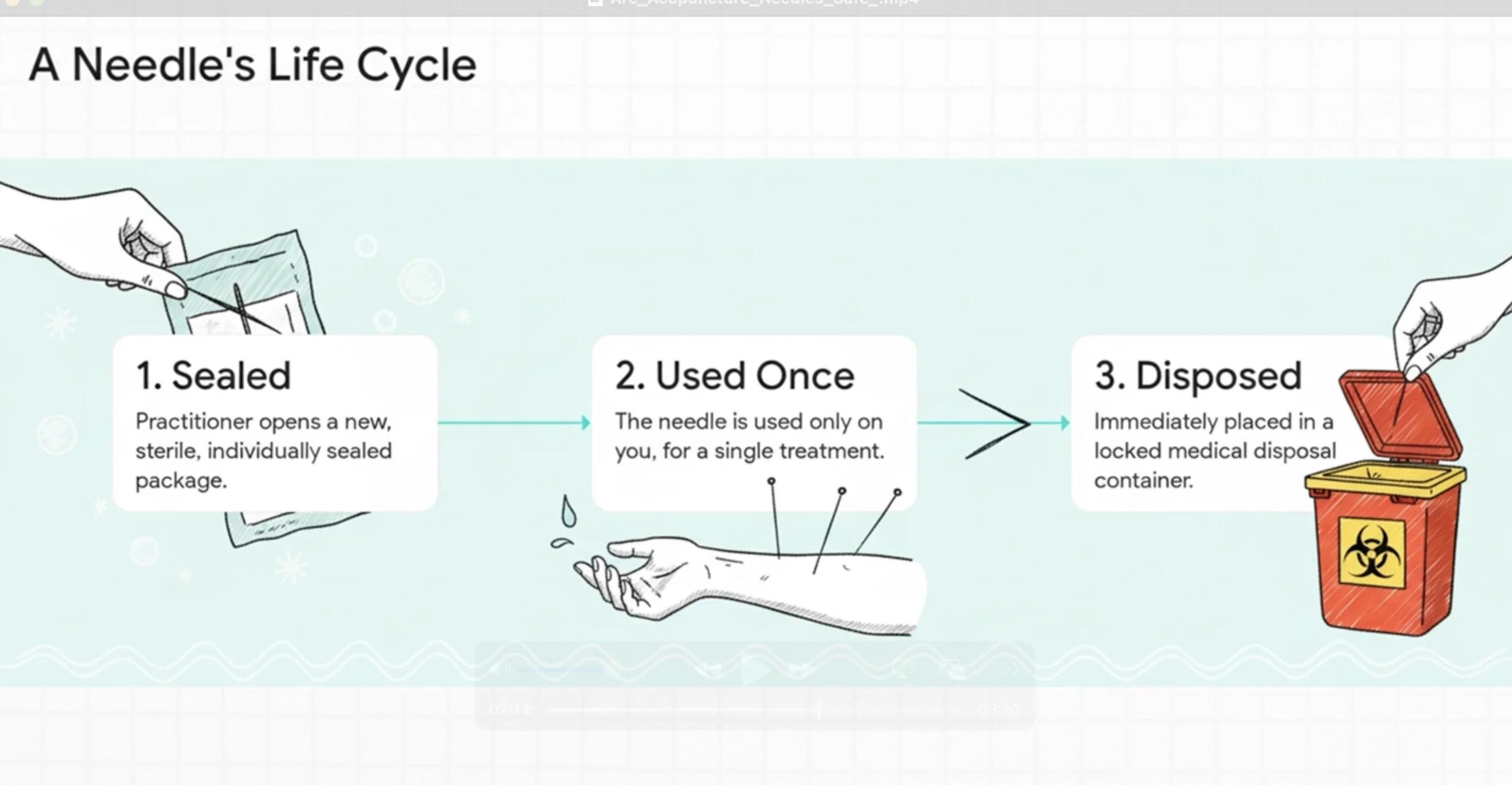
The process you'll see in every treatment follows a simple, transparent three-step cycle.
1. Sealed: Practitioner opens a new, sterile, individually sealed package
2. Used Once: The needle is used only on you, for a single treatment
3. Disposed: Immediately placed in a locked medical disposal container
You should see this happen in front of you. If you don't, ask.
Patient Engagement [3:02]
Safety protocols work best when patients feel empowered to ask questions. Here's what you should feel comfortable asking.
Patients should feel empowered to ask about safety protocols
Practitioners should be willing to show the sealed package and explain the safety measures
A good practitioner welcomes these questions. If asking about safety feels uncomfortable, that's a red flag.

Are Acupuncture Needles Safe?
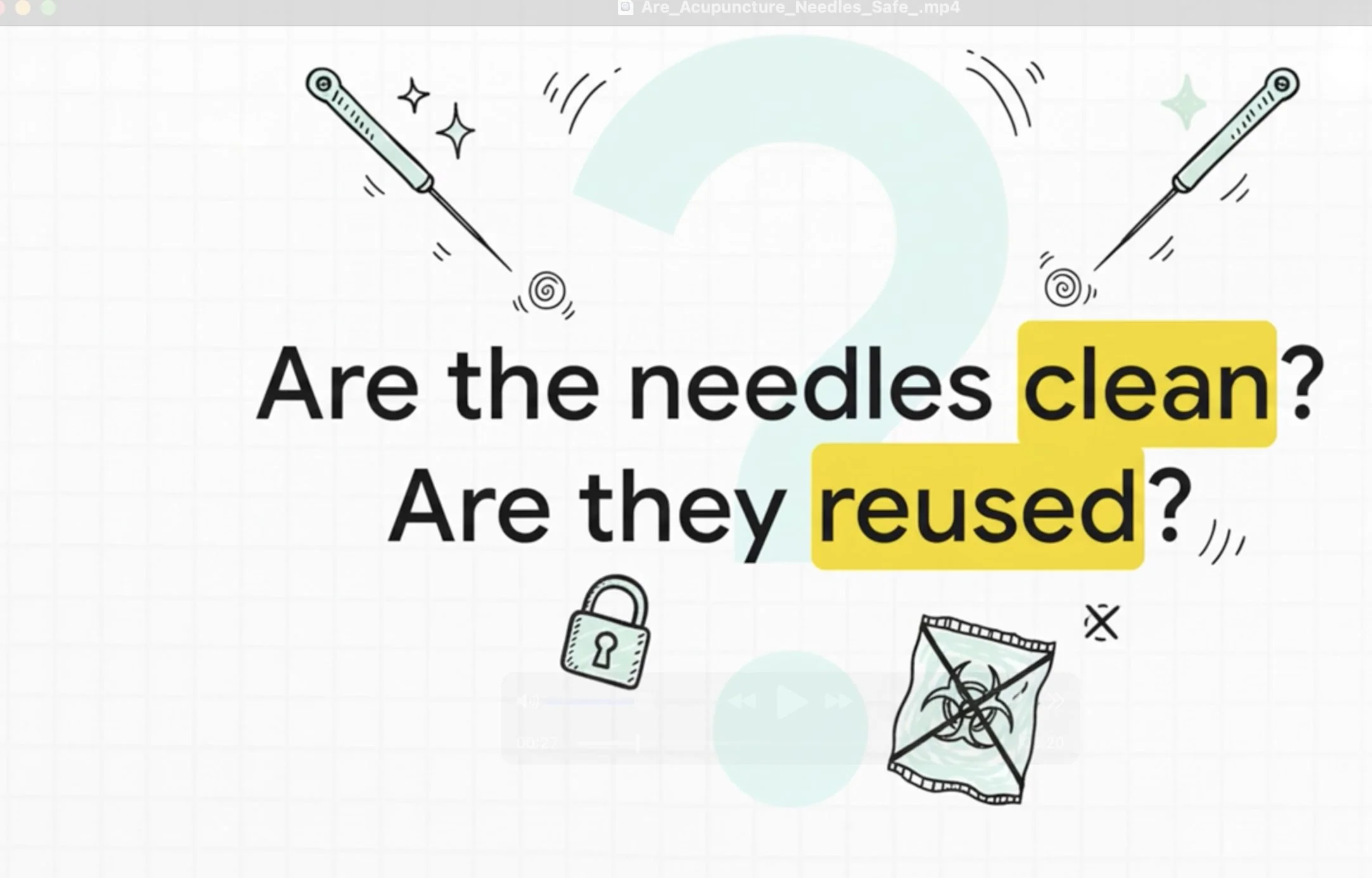
It's a fair question—one of the first things people ask before trying acupuncture. The idea of needles can be intimidating, and wanting to understand the safety protocols is completely normal.
The short answer is yes. When performed by a licensed professional in the United States, acupuncture is remarkably safe. A massive 2021 review published in BMJ Open covering over 12.9 million treatments found that serious adverse events occur in only about 1 in 10,000 patients—making professionally administered acupuncture one of the safest medical interventions available.
Here's what guarantees that safety: a simple, interlocking system of federal laws, mandatory professional training, and transparent in-clinic procedures you can see for yourself.
1. Yes, Every Needle Is Sterile and Single-Use by Law
Safety starts with federal law. Since 1996, the U.S. Food and Drug Administration (FDA) has required all acupuncture needles to be sterile and clearly labeled for single use only.
The FDA classifies acupuncture needles as Class II medical devices—the same category as contact lenses and pregnancy test kits. Reusing an acupuncture needle isn't just bad practice, it's illegal. This standard was established to eliminate infection risks like hepatitis that were historically associated with improperly sterilized, reusable needles.
Each needle is manufactured, sterilized (typically using ethylene oxide gas, the same method for surgical instruments), and sealed in its own sterile package before it ever reaches a clinic. The 2021 review covering over 12.9 million treatments concluded that with modern single-use standards, the risk of infection is effectively eliminated.
So to answer the question "are acupuncture needles sterile?"—yes, by law and by design.
2. What This Means for Your First Treatment
The legal requirements translate into a transparent process you'll see in every treatment. Here's the step-by-step:
Your practitioner opens individually sealed, sterile packages in front of you. You see brand-new needles being removed for your treatment. After a needle is used once, it's immediately placed into a designated, puncture-proof container.
This disposal container is a red, regulated "sharps container"—the same containers used in hospitals and doctors' offices. When full, these aren't thrown in regular trash. They're collected by licensed medical waste companies for disposal, a process governed by OSHA's Bloodborne Pathogens Standard.
In addition to federal device regulations, licensed acupuncturists must complete Clean Needle Technique certification to get their license. This training covers bloodborne pathogen protocols, hand hygiene, sterile needle handling, and OSHA-compliant disposal.
It's perfectly acceptable to ask questions. You can ask your practitioner to see the sealed packages before they're opened or inquire about their safety training. A good practitioner welcomes these questions.
3. The Bottom Line from My San Diego Practice
As a licensed acupuncturist, safety protocols aren't just rules in a manual—they're the foundation of my daily practice. In my San Diego clinic, this means opening sterile, individually sealed packages in front of you for every single point, and every used needle goes immediately into a sealed, red sharps container that's picked up by the same medical waste service that handles local hospitals. This is non-negotiable.
I work with a lot of athletes, and they often mention feeling relieved when they see the sealed packages being opened for the first time. That visual confirmation provides immediate peace of mind.
The safety standards create multiple, interlocking layers of protection:
Federal law (FDA) requires all needles to be sterile and single-use
Professional certification (Clean Needle Technique) ensures trained practitioners
OSHA guarantees safe handling and disposal according to federal Bloodborne Pathogens Standards
Conclusion
Modern acupuncture needles are sterile, single-use, and regulated by federal law, with safety standards that effectively eliminate infection risk.
While your personal comfort level with needles is unique to you, the safety standards are universal, data-backed, and legally enforced to protect every patient in every licensed clinic. If you have questions about safety, a licensed acupuncturist will always be happy to walk you through their procedures.
If you're curious about acupuncture but want to see the safety protocols firsthand, I offer complimentary 15-minute assessments at my San Diego practice where you can ask any questions and see exactly how the process works.